
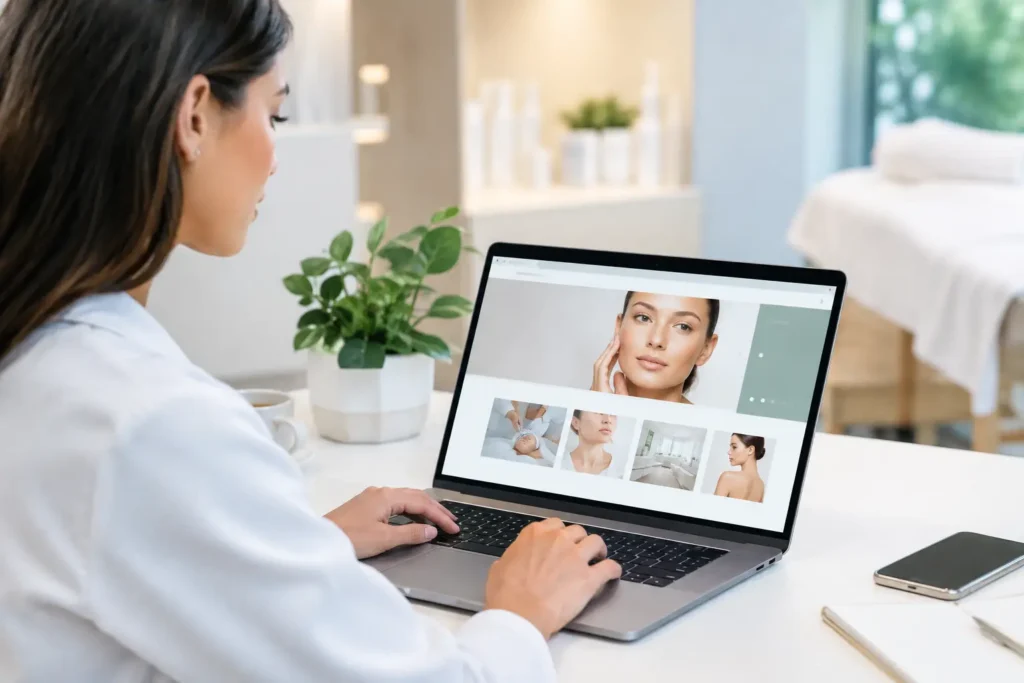
A prospective patient may compare three med spas in less than ten minutes, usually from a phone. The practice that explains treatments clearly, proves its credibility, and makes booking easy has a meaningful advantage. The best med spa website features are not decorative extras. They are the parts of your website that turn local attention into qualified consultations.
For a med spa, the website has to do more than look polished. It must answer clinical, financial, and practical questions quickly enough to keep a prospective patient moving forward. That means strong visuals matter, but so do treatment details, provider credentials, reviews, location information, and an obvious path to contact your practice.
Best Med Spa Website Features Start With Conversion
A high-performing med spa website should guide visitors toward one primary action: booking a consultation, requesting information, or calling the office. If a visitor has to hunt for that next step, many will leave and continue searching.
Place a clear call to action in the top section of every major page. Use direct language such as “Book a Consultation,” “Request Your Appointment,” or “Call Our Med Spa.” The button should stand out without competing with five other options. Repeating the same call to action at logical points down the page helps visitors act when they are ready.
Your contact options should match how your patients prefer to communicate. A visible phone number is essential, particularly for high-consideration services such as injectables, laser treatments, body contouring, or skin rejuvenation. Online booking or a short appointment-request form can reduce friction for visitors who are researching after business hours.
There is a trade-off here. A long intake form may help your team gather details, but it can reduce completion rates. On the website, ask only for the information needed to begin the conversation: name, phone or email, treatment interest, and preferred contact method. Your staff can collect clinical history later through a secure process.
Clear Treatment Pages That Answer Real Questions
Generic service pages do not build confidence or perform well in local search. Each core treatment should have its own dedicated page, written for patients who are deciding whether the service is right for them.
A useful treatment page explains what the procedure addresses, who may be a candidate, what the appointment involves, expected downtime, common aftercare considerations, and when results may appear. It should also set appropriate expectations. Promising a specific outcome may create distrust and can be a poor fit for a medical service where results vary by person.
Before-and-after galleries can be persuasive when they are authentic, properly consented to, and presented with context. Show consistent lighting and angles where possible, and avoid editing that creates unrealistic expectations. A gallery should support a conversation about treatment options, not replace one.
Treatment pages also give your practice more opportunities to appear for high-intent searches. A person searching for “Botox near me,” “laser hair removal in [city],” or “RF microneedling consultation” has a different need than someone simply browsing med spa services. Specific pages help search engines and patients understand exactly what your practice offers.
Pricing Guidance Builds Better Leads
Med spa owners often hesitate to discuss price online because treatment plans vary. That is reasonable, but withholding every pricing detail can lead to lower-quality inquiries and frustrated visitors.
You do not always need to publish a fixed price. Starting prices, package ranges, financing availability, consultation requirements, or factors that affect cost can give prospective patients a realistic frame of reference. The goal is not to turn your website into a price sheet. It is to help the right patient feel informed enough to take the next step.
Trust Signals Should Be Easy to Find
A patient is trusting your practice with their appearance, comfort, and health. Your website should make it easy to verify who is providing care and why the practice is credible.
Provider bios deserve more than a headshot and a title. Include licenses, relevant training, clinical experience, treatment specialties, and a concise explanation of the provider’s approach. Patients want to know whether they will be seen by a physician, nurse practitioner, registered nurse, esthetician, or another qualified professional.
Patient reviews also have a major role in converting visitors who are close to booking. Feature genuine testimonials in relevant places, such as near a treatment call to action or on a dedicated reviews page. Specific comments about communication, comfort, results, and the office experience are more useful than vague praise.
Professional affiliations, awards, media mentions, and safety protocols can reinforce trust when they are current and meaningful. Avoid filling the site with badges that do not explain anything to the patient. A few credible signals, presented clearly, are more effective than visual clutter.
Visuals Must Reflect the Actual Experience
Stock imagery can make a website feel generic, especially when every competitor uses the same model photos. Original photography of your providers, office, treatment rooms, and front-desk team helps patients recognize the real practice behind the website.
That does not mean every page needs a large photo gallery. Use professional images strategically to show an environment that is clean, welcoming, and consistent with your brand. If your practice positions itself as clinical and science-led, the design should support that. If it emphasizes luxury self-care, the website can feel elevated while still communicating medical credibility.
Mobile Speed and Accessibility Protect Every Lead
Most local med spa searches happen on mobile devices. A site that looks good on a desktop but forces phone users to pinch, zoom, or wait for oversized images can lose appointments before a visitor reads the first service description.
Mobile-friendly design means buttons are easy to tap, forms are simple to complete, phone numbers are clickable, and key information appears without excessive scrolling. Page speed matters too. Heavy video backgrounds, uncompressed photos, and unnecessary animation can make a visually attractive site slower than patients will tolerate.
Accessibility is also a practical business consideration. Features such as readable color contrast, descriptive image text, keyboard navigation, properly structured headings, and captions for video make your content easier to use for more people. Accessibility should be built into the design process rather than added as an afterthought.
Local SEO Features Help Nearby Patients Find You
A beautiful website cannot generate consultations if local patients never see it. Your site should clearly establish where you practice and which communities you serve.
Include your practice name, address, phone number, hours, and service area in consistent locations. A dedicated contact page with a map, parking information, and directions can remove common barriers to booking. For practices with multiple locations, give each office its own accurate location page rather than placing every address in one crowded paragraph.
Location-focused content should be useful, not repetitive. Mentioning a city naturally alongside relevant services is helpful. Creating dozens of nearly identical city pages is not. Search engines and patients both respond better to pages with genuine details about the practice, its providers, and its local availability.
Technical SEO also matters behind the scenes. Clean page structure, descriptive titles, accurate service information, and properly configured tracking help your marketing team understand which pages generate calls and appointment requests. Without measurement, it is difficult to know whether a redesign is improving revenue or simply changing the look of the site.
Make the Website Work With Your Front Desk
Your marketing and front-desk workflows should support one another. If your website promises same-day callbacks, online booking, or a specific promotion, your team needs a reliable process to deliver on it. A delayed response to a consultation request can erase the value of a strong website experience.
Track where leads come from, which treatments they ask about, and whether those inquiries become booked consultations. This data reveals where your site may need improvement. For example, a page may receive strong traffic but few requests because it lacks price guidance, answers too few questions, or buries the booking button.
The most effective med spa websites make the next step feel obvious and comfortable. When patients can quickly understand your services, verify your expertise, and request an appointment from any device, your website stops being a brochure and starts supporting the growth of the practice.